
Maybe some kind of whats new
Lorem ipsum dolor sit amet, consectetur adipiscing elit, sed do eiusmod tempor incididunt ut labore et dolore magna aliqua.

December 16, 2025

Just a few minutes inland from the Moeraki Boulders on the North Otago coast, third-generation farmer Neville Caldwell runs a Coopworth-based ram breeding operation where constitution and performance outweigh eye appeal.
Just a few minutes inland from the Moeraki Boulders on the North Otago coast, third-generation farmer Neville Caldwell runs a Coopworth-based ram breeding operation where constitution and performance outweigh eye appeal.
Caldwell established his stud about 15 years ago after attending the Gore Stud Sale and deciding he wanted more control over the quality of rams he was working with.
“I thought, if I’m going to pay good money for rams, I may as well start breeding my own,” he says.
The stud now includes around 300 ewes, with Coopworths making up the foundation flock.
Caldwell also produces Coopdale (Perendale × Coopworth) and Texel-cross rams to suit a range of farming systems. The stud consistently scans around 200 percent, and selection is guided by recorded performance data.
Breeding priorities: growth, meat and resilience
Caldwell selects for growth rate, meat yield and constitution. Fertility is considered a given.
“If a ewe has a single two years in a row, she goes,” he says. “They have to produce twins. Fertility is not an issue here.”
Texel blood provides added muscling, while Coopdale progeny are popular with clients seeking hybrid vigour and toughness. Caldwell says one of his Coopworth rams tested in the top one percent nationally for growth, reflecting a strong focus on carcass traits in recent years.
Sheep must thrive in real conditions
Rams are expected to perform under natural conditions. Caldwell does not feed them grain or shelter them.
“I’ve been to ram sales where the rams turn up covered and full of grain,” he says. “Mine have to handle what North Otago throws at them – droughts, storms, whatever. If they fade in those conditions, they are gone.”
He has not drenched his stud ewes for about 20 years.
“They’ve got to do it themselves. Lambs get a couple of drenches when they’re young, but after that, they have to stand on their own four feet.”
Data-driven but commonsense driven too
The stud uses EID tagging, SIL reporting, and eye-muscle and IMF scanning to track genetic progress.
Wool weights are also recorded, with ewes typically cutting six to seven kilograms of wool.
Caldwell acknowledges wool returns remain challenging but believes recording remains an important part of stud performance.
Farmer feedback plays a key role.
“One farmer told me his Coopworth-cross lambs outweighed his Pole Dorset-cross lambs,” he says. “Another said it was the cleanest ram he had ever had – no dags on the lambs. That sort of feedback is good to hear.”
Family roots and future genetics
Moeraki Downs has been in Caldwell’s family for three generations. His son Nathan, who manages a farm in the Mackenzie Country, is involved in genetic direction, and his daughter teaches agriculture at a high school in Auckland.
New genetics are regularly introduced through selected rams sourced from across the country. Caldwell and Nathan have travelled through the North Island visiting respected Coopworth studs and often returned home with new sires.
A practical approach to ram selection
Caldwell does not hold a formal ram sale.
Instead, repeat clients visit the farm and select rams when it fits their lambing calendar. His Coopdales remain popular in South Canterbury and Otago, while interest in Texel-cross rams is growing, particularly from Southland.
When asked what makes a good ram, his answer is straightforward.
“It has to have good constitution and survive our conditions. I’ve seen rams with good figures, but when you look at them, they’re not the sort of sheep I want to be looking at in my paddock every day. It has to look right and hold up in our conditions.”
Advice for young farmers
Caldwell encourages younger farmers not to be afraid of trial and progress.
“Give it a crack. Don’t be scared to try different things. And whatever you do, make sure you enjoy it.”
That belief in practical, steady improvement has shaped the stud.
For Caldwell, good rams are those that grow fast, handle tough conditions and keep performing year after year.
By Claire Inkson
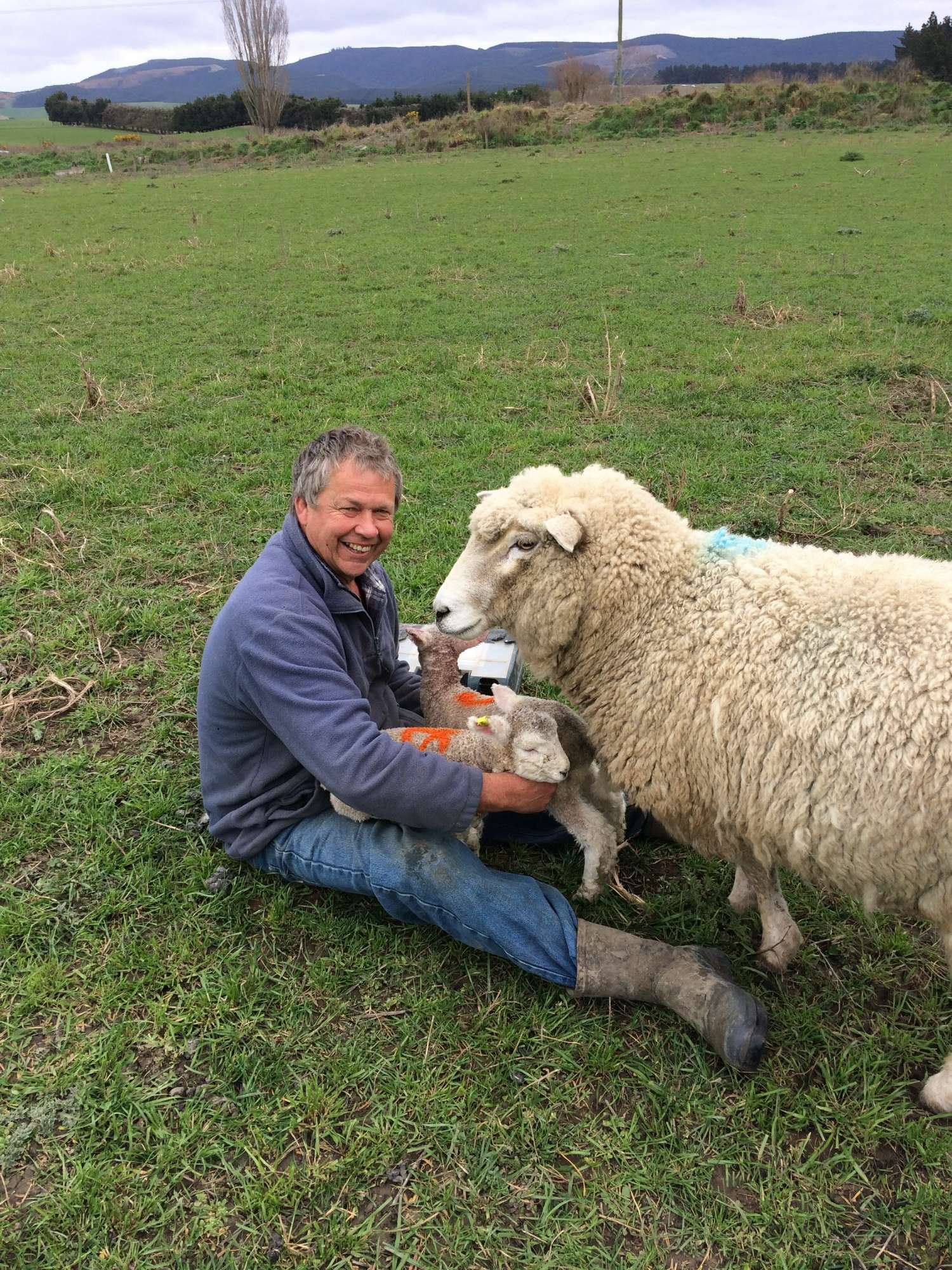
Just a few minutes inland from the Moeraki Boulders on the North Otago coast, third-generation farmer Neville Caldwell runs a Coopworth-based ram breeding operation where constitution and performance outweigh eye appeal.
Caldwell established his stud about 15 years ago after attending the Gore Stud Sale and deciding he wanted more control over the quality of rams he was working with.
“I thought, if I’m going to pay good money for rams, I may as well start breeding my own,” he says.
The stud now includes around 300 ewes, with Coopworths making up the foundation flock.
Caldwell also produces Coopdale (Perendale × Coopworth) and Texel-cross rams to suit a range of farming systems. The stud consistently scans around 200 percent, and selection is guided by recorded performance data.
Breeding priorities: growth, meat and resilience
Caldwell selects for growth rate, meat yield and constitution. Fertility is considered a given.
“If a ewe has a single two years in a row, she goes,” he says. “They have to produce twins. Fertility is not an issue here.”
Texel blood provides added muscling, while Coopdale progeny are popular with clients seeking hybrid vigour and toughness. Caldwell says one of his Coopworth rams tested in the top one percent nationally for growth, reflecting a strong focus on carcass traits in recent years.
Sheep must thrive in real conditions
Rams are expected to perform under natural conditions. Caldwell does not feed them grain or shelter them.
“I’ve been to ram sales where the rams turn up covered and full of grain,” he says. “Mine have to handle what North Otago throws at them – droughts, storms, whatever. If they fade in those conditions, they are gone.”
He has not drenched his stud ewes for about 20 years.
“They’ve got to do it themselves. Lambs get a couple of drenches when they’re young, but after that, they have to stand on their own four feet.”
Data-driven but commonsense driven too
The stud uses EID tagging, SIL reporting, and eye-muscle and IMF scanning to track genetic progress.
Wool weights are also recorded, with ewes typically cutting six to seven kilograms of wool.
Caldwell acknowledges wool returns remain challenging but believes recording remains an important part of stud performance.
Farmer feedback plays a key role.
“One farmer told me his Coopworth-cross lambs outweighed his Pole Dorset-cross lambs,” he says. “Another said it was the cleanest ram he had ever had – no dags on the lambs. That sort of feedback is good to hear.”
Family roots and future genetics
Moeraki Downs has been in Caldwell’s family for three generations. His son Nathan, who manages a farm in the Mackenzie Country, is involved in genetic direction, and his daughter teaches agriculture at a high school in Auckland.
New genetics are regularly introduced through selected rams sourced from across the country. Caldwell and Nathan have travelled through the North Island visiting respected Coopworth studs and often returned home with new sires.
A practical approach to ram selection
Caldwell does not hold a formal ram sale.
Instead, repeat clients visit the farm and select rams when it fits their lambing calendar. His Coopdales remain popular in South Canterbury and Otago, while interest in Texel-cross rams is growing, particularly from Southland.
When asked what makes a good ram, his answer is straightforward.
“It has to have good constitution and survive our conditions. I’ve seen rams with good figures, but when you look at them, they’re not the sort of sheep I want to be looking at in my paddock every day. It has to look right and hold up in our conditions.”
Advice for young farmers
Caldwell encourages younger farmers not to be afraid of trial and progress.
“Give it a crack. Don’t be scared to try different things. And whatever you do, make sure you enjoy it.”
That belief in practical, steady improvement has shaped the stud.
For Caldwell, good rams are those that grow fast, handle tough conditions and keep performing year after year.
By Claire Inkson